Home » 2026 Swimwear Trends Australian Lingerie Retailers Should Be Buying Into
Swimwear buying in 2026 is becoming less about selecting a collection of bikinis, one-pieces and perhaps a pareo or two, and more about building out a full warm-weather wardrobe proposition. It’s a distinction that matters.
Customers increasingly expect swimwear to deliver several things at once: flattering fit, credible support, fashion relevance, comfort, and enough versatility to work beyond the beach. A bikini top may need to provide the technical reassurance of a well-designed bra while also looking strong enough to style with a shirt or resort trouser. A one-piece may be expected to work as both swimwear and a bodysuit. The availability of matching cover-ups increasingly forms part of the same purchase decision, and customers are thinking about how they can style them away from the water as well as near it.
In terms of the visual aesthetic, current international trend reporting points to two broad directions shaping swim in 2026: refined, minimalist silhouettes on one side, and expressive texture, print and embellishment on the other. Sport-influenced pieces, tankinis, boy shorts, polished one-pieces and coordinated resort styling are also gaining visibility.
For retailers, however, trend relevance is only part of the buying decision. The more important question is:
Which 2026 swimwear trends have enough commercial strength to deserve space in an ANZ swimwear assortment?
This guide examines the swimwear trends Australia’s 2026 buyers should be considering, with a focus on fit, premium positioning, merchandising opportunities and the realities of Australian and New Zealand retail.
Swimwear occupies an unusually strong position within the ANZ market. Australia’s climate, coastal lifestyle, domestic travel patterns and long summer season create natural demand, while New Zealand retailers also benefit from holiday, resort and summer-led purchasing. Swimwear can additionally extend the commercial relevance of specialist lingerie stores beyond traditional bra and intimate apparel categories.
Digital demand reinforces the opportunity. Australians spent $82.6 billion online during 2025, up 14% year-on-year, with fashion and apparel accounting for $11.6 billion in online expenditure. Eighty-two per cent of Australian households shopped online during the year.
In New Zealand, online retail spending increased 12% year-on-year during the first half of 2026. Domestic retailers captured 79% of that online spending, while online retail grew six times faster than in-store spending.
That creates an important environment for specialist swimwear retailers. Customers have access to more products than ever, but they also need help distinguishing between purely fashion-led swimwear and products that genuinely meet their fit, support and lifestyle needs.
This is where specialist boutique retailers can compete – and win.
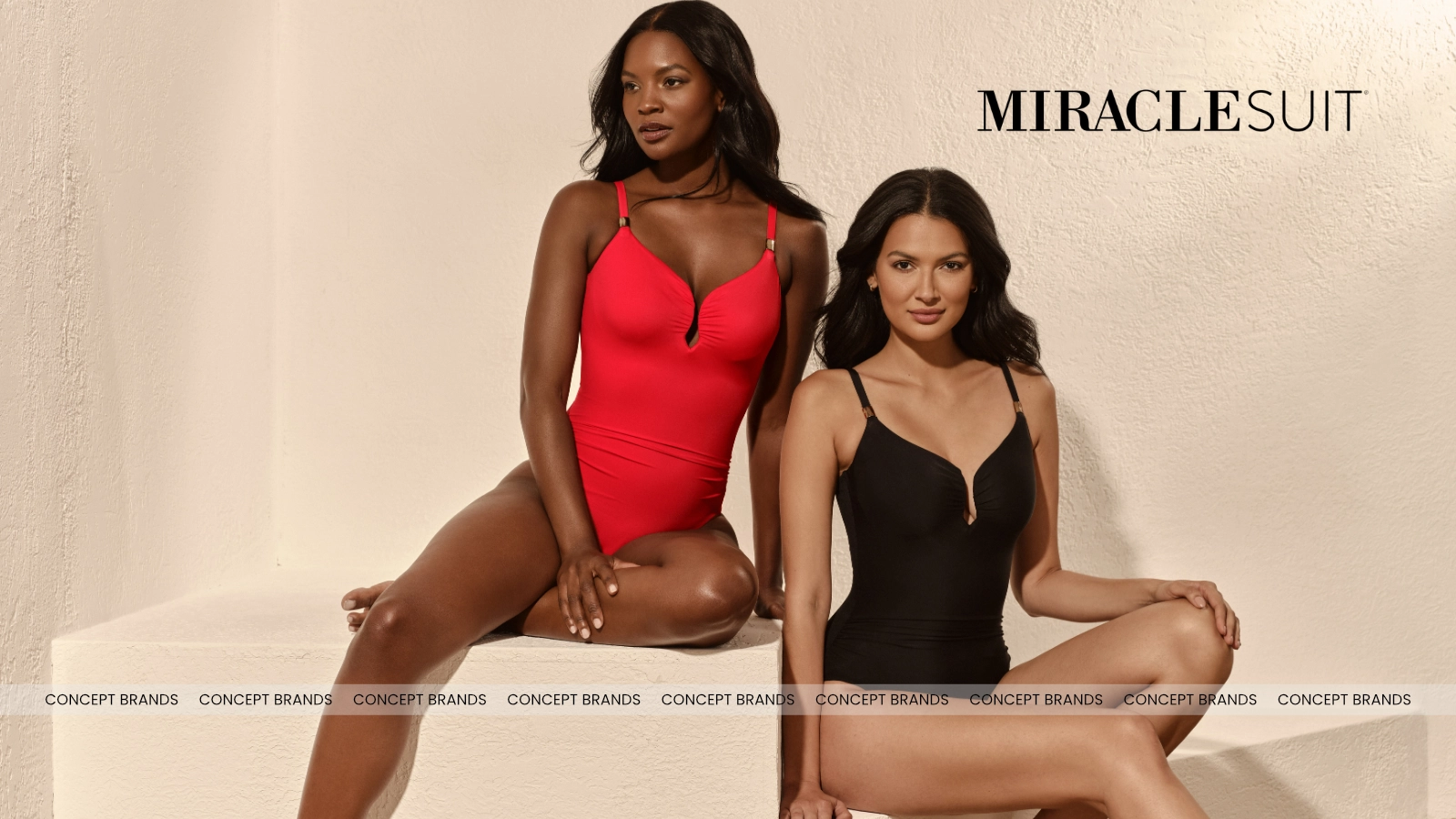
One of the clearest 2026 swimwear trends Australia and New Zealand retailers should watch is the continued elevation of the one-piece.
The style has moved well beyond the purely practical swimsuit. Vogue identifies streamlined minimalist one-pieces as a major 2026 swim direction, while ELLE notes that current collections are balancing statement designs with restrained silhouettes and neutral palettes.
For retailers, the commercial appeal is significant. A sophisticated one-piece can serve several customer groups simultaneously:
The strongest one-piece assortment should not consist of one repeated silhouette in different colours.
Consider a mix of:
Perhaps the most commercially relevant swim direction for primarily lingerie-focused retailers is the continued crossover between swimwear and lingerie construction. Supportive fits can become a major point of difference that brings customers to you, rather than to their local fashion retailer who only carries S, M, L sizing and zero-support options, however pretty.
Structured bikini tops, balconette shapes and underwired designs allow retailers to bring their familiar bra-fitting expertise into swimwear. This matters because customers are increasingly unwilling to choose between fashion and support.
An attractive swimsuit that fails to provide confidence in the fitting room is difficult to sell. Conversely, a technically-excellent style that feels dated may struggle against more fashion-conscious competitors. The opportunity lies in combining both.
General fashion stores may merchandise swimwear primarily by colour, print or collection. A specialist lingerie retailer can go further.
Staff can discuss:
That expertise turns swimwear into a consultative category. Where possible, wholesale buyers should look beyond generic alphabetical sizing, and towards bra-sized swimwear (or at least styles with additional support features such as underwire) that can serve customers who require more precise support, particularly fuller-bust shoppers.
Not every important trend in 2026 is visually loud. Who What Wear describes a strong movement towards refined simplicity, including sleek one-pieces and minimalist bikinis with a distinctly 1990s influence.
This trend is particularly useful for premium retailers to pay attention to, because simplicity puts greater focus on construction. When embellishment and print are removed, customers notice:
Black remains commercially important, but the neutral story is expanding. Chocolate and fudge-like browns are prominent across 2026 swimwear colour reporting, while neutral and monochromatic palettes remain influential. At the same time, stronger shades such as aqua and purple are gaining momentum for customers seeking colour.
For an ANZ retailer, that suggests a balanced buying strategy: retain dependable neutrals, and only introduce selected seasonal colours rather than filling the entire assortment with trend-led shades.
Texture is one of the easiest ways for a swimsuit to feel premium without depending on a complicated print.
Current 2026 collections are showing:
ELLE specifically identifies texture as one of the season’s defining swimwear directions, including crochet and puckered constructions.
For retailers, texture performs several functions. It creates visual interest in-store, can photograph well for eCommerce and social media, elevates a simple silhouette and block-colour design into something that feels more premium, and gives customers another reason to perceive a garment as more distinctive.
Not every texture has equal appeal, however. Fashion-forward crochet may perform strongly in resort-focused or younger assortments, while subtler ribbed or crinkle fabrics may have broader commercial appeal. Buy according to your typical customer profile rather than trend visibility alone.
One of the most important commercial developments in swim is that the swimsuit itself is no longer always the complete purchase.
2026 fashion coverage increasingly shows swimwear styled with:
Fashion reporting is also documenting the broader movement of swimsuits into everyday styling, with bikini tops also functioning as crop tops and one-pieces being worn as bodysuits. This represents a major cross-selling opportunity to position swimwear as part of a broader lifestyle wardrobe.
Instead of merchandising: Bikini Top + Bikini Bottom
Consider: Bikini Set + Shirt + Sarong
Or: One-Piece + Resort Pant + Overshirt
The commercial value is obvious. A customer who enters intending to purchase one swimsuit can potentially leave with an entire holiday look, having spent much more in the process.
Sport influence continues to shape mainstream fashion, and swimwear is participating in that shift.
Marie Claire identifies a “surfer girl” direction built around rash guards, board shorts, zip-front suits and sport-inspired layers. Who What Wear similarly points to the return of boy shorts, tankinis and early-2000s surf influences.
For retailers in the sports-loving nation of Australia, this direction has clear relevance. Surf, coastal and active lifestyles are already embedded in the market. The opportunity is to interpret the trend through premium design rather than purely performance-oriented product, so it holds appeal to both the customer who’s going to be surfing and the one who’ll only be sunbathing.
Buyers should consider incorporating:
This trend can be especially useful for retailers whose customers value coverage and sun-conscious dressing.
Few swimwear styles illustrate fashion’s cyclical nature as clearly as the tankini. Once associated strongly with early-2000s swimwear, the silhouette is appearing again within contemporary fashion coverage.
Retailers should not assume this simply means returning to older tankini designs. The 2026 interpretation is cleaner and more fashion-conscious. Potential directions include:
The tankini offers a useful compromise. It provides more torso coverage than a bikini while retaining the practicality of separates. That appeals to customers who do not necessarily want a traditional one-piece but prefer greater coverage than a conventional bikini.
Print remains important, but the mood is becoming more specific. Polka dots and gingham have emerged across 2026 swimwear reporting, while expressive graphic prints also feature prominently. These prints tap into a broader fashion interest in nostalgia.
For retailers, the lesson is not to replace commercial solids with prints entirely. Instead, use print strategically. A commercially balanced swimwear buy should include:
Core: black and dependable neutrals.
Seasonal colour: solid colour in selected on-trend shades.
Fashion print: dots, gingham, graphics or signature brand motifs.
This approach helps maintain continuity while giving the store enough novelty to generate seasonal interest.
Premium swimwear does not always need loud branding. In fact, 2026 luxury direction increasingly favours recognisable brand codes, refined hardware and subtle embellishment over overt logos.
Who What Wear points to “quiet” designer identifiers and jewellery-like detailing, while Vogue highlights beading, shells and other beach-inspired embellishments.
Look for details such as:
These elements can create perceived value and support premium price points.
Retailers should still evaluate practicality. Hardware needs to work in environments involving saltwater, chlorine, sunscreen and heat, not simply look attractive on a hanger. Otherwise, you risk eroding customer trust in what you’re selling.
Colour is one of the easiest ways for retailers to participate in Australia’s 2026 swimwear trends, but also one of the easiest areas to overbuy. Several directions are emerging:
Premium Neutrals: Chocolate brown and related earthy shades have become important fashion colours. Cream, ivory and white also remain relevant, particularly when combined with romantic textures or subtle detailing. Harper’s Bazaar notes white swimwear updated through ruching, eyelet and scalloped finishes.
Aquatic Colour: Aqua and turquoise offer an obvious connection to resort and coastal dressing and are gaining fashion momentum in 2026.
Strong Statement Colour: Purple and vivid colour remain useful for seasonal impact.
The key is to avoid ending up with numerous on-trend colours but insufficient black, navy or other proven shades to meet the ongoing demand for them. Seasonality is important, but basics are often where the bulk of your potential turnover lies.
Trend forecasting is great, but it needs to sit alongside the realities of consumer spending.
Australian shoppers remain highly value-conscious. Australia Post reports that 81% shop around for deals, while the average online basket has declined as customers make more frequent purchases. By FY26 Q4, the average Australian online basket had fallen to $90, while 59% of shoppers reported that they never buy full price.
That does not mean premium swimwear cannot perform. It means premium products need a clear value story – a compelling reason for customers to make the splurge.
Retail teams and product pages should be able to explain:
A premium swimsuit that delivers bra-like support, slims and flatters the figure, and will withstand chlorine and salt-water without degrading or tarnishing has a much stronger value proposition than a fashion-only product that looks similar to lower-priced alternatives and has no real USPs beyond aesthetics.
A trend list is only useful if it improves the buying plan.
Do not allow seasonal fashion to eliminate dependable products. Maintain depth in commercially important:
Use smaller seasonal buys to introduce:
This enables trend participation without excessive inventory exposure.
A strong mix-and-match strategy allows customers to combine sizes and silhouettes. This is particularly valuable for lingerie-first retailers because customers frequently need a different size or level of support on top than on the bottom. If you can offer them separates while their nearest fashion store only sells as a set, you’ve got a clear advantage among full-busted or pear-shaped shoppers.
Ask what each style adds to the assortment. Does it provide:
Avoid buying multiple styles that solve exactly the same need.
Trend product creates excitement, but continuity styles create repeat business. Remember to balance fashion drops with consistent replenishment in reliable styles for the customer who prioritises quality, fit, comfort or coverage over wearing the latest look.
With digital shopping continuing to expand in both Australia and New Zealand, online swim merchandising deserves as much attention as in-store presentation.
Customers should be able to understand fit without trying the garment on.
This information is valuable for customers, conventional search engines and increasingly AI-assisted shopping discovery. Australia Post reports that 32% of Australian shoppers are already using AI for shopping advice, with fashion among the categories shoppers would consider purchasing through future AI shopping agents.
Retailers therefore need product information that machines can understand as easily as customers can. “Blue bikini set” is weak product content. “Underwired balconette bikini top with adjustable straps, fuller-bust support and coordinating high-waisted, high-leg line bottoms” communicates considerably more.
Premium swimwear can give specialist retailers an assortment that is harder to replicate through mass-market fashion.
The strongest premium ranges may provide advantages through:
There is also an important strategic advantage: premium swimwear enables retailers to use the same consultative model they already apply to lingerie. Instead of simply selling colour and fashion, staff can sell fit, construction and confidence.
Higher-end brands also equal exclusivity. They won’t allow their products to be sold anywhere and everywhere, meaning you can offer something your local competitors won’t also have.
Before confirming a seasonal buy, consider whether the range includes:
The objective is not to stock every trend. It’s to select the trends that strengthen your existing customer proposition.
The strongest 2026 swimwear trends in Australia reveal a category becoming more sophisticated, and more multi-functional.
Minimalist one-pieces are becoming wardrobe basics. Bikinis are borrowing construction from lingerie. Sport-inspired styles are returning through tankinis, swim shorts and surf-influenced layering. Texture, nostalgic prints and jewellery-like embellishments are giving seasonal collections personality. And swimwear is increasingly being merchandised alongside resortwear rather than treated as an isolated beach-only category.
For Australian and New Zealand lingerie retailers, however, the biggest opportunity remains fit. Trend-led swimwear is available almost everywhere. Trend-led swimwear backed by genuine fitting expertise is far harder to replicate.
Retailers that combine premium design with cup knowledge, supportive construction, fit diversity and strong digital merchandising can create a swimwear proposition built for more than one summer.
Concept Brands works with lingerie boutiques, fashion retailers, department stores and eCommerce businesses across Australia and New Zealand, supporting retailers across swimwear, lingerie and shapewear categories with a curated range of premium international brands.
Whether you are expanding an existing swimwear department or introducing swim into your assortment for the first time, the Concept Brands team can help you explore wholesale opportunities suited to your business.
Explore the wholesale catalogue, connect with the Concept Brands team or register to become a customer through the B2B portal. Visit: https://b2b.conceptbrands.com.au
Major 2026 trends include minimalist one-pieces, lingerie-inspired underwired swimwear, textured fabrics, sophisticated neutrals, nostalgic prints, sporty silhouettes, tankinis, swim shorts and coordinated resortwear.
Yes. Streamlined and fashion-led one-piece swimsuits are a significant 2026 trend. Minimal designs, bandeau shapes, supportive constructions and styles that can double as bodysuits are particularly relevant.
Tankinis are experiencing renewed fashion interest alongside other early-2000s swim silhouettes. Contemporary versions tend to be cleaner, sportier and more streamlined than traditional tankini designs.
Chocolate and other premium neutrals are important, while turquoise, aqua, purple and selected bold shades provide on-trend seasonal colour. Black remains an essential commercial core for many retailers.
Polka dots, gingham and bold graphic prints are among the key directions appearing in 2026 fashion coverage. Retailers should balance print with dependable solid colours to avoid over-reliance on seasonal fashion.
Structured swimwear remains commercially important, particularly as customers increasingly expect swim tops to offer both fashion and support, and want to wear them away from the beach as well. Underwired, balconette and cup-conscious bikini constructions are especially relevant to retailers who primarily specialise in lingerie.
Swimwear allows lingerie retailers to extend their fitting expertise into another support-sensitive category. It can also create additional seasonal revenue, cross-selling opportunities and stronger customer retention, particularly when the assortment includes specialist fit and fuller-bust products.
Increasingly, yes. Swimwear is being styled as part of complete holiday wardrobes, creating opportunities to cross-sell sarongs, shirts, pants, dresses and other resort pieces.
The strongest buying strategy typically includes both. Core styles provide dependable sales and reorder potential, and shouldn’t ever go out of stock, while controlled seasonal capsules bring fashion relevance and help refresh the assortment so customers keep coming back to see what’s new.
Retailers should evaluate fit consistency, support, fabric quality, cup construction, stretch recovery, adjustable features, hardware quality, size breadth, and the brand’s overall point of difference.
Retailers looking to strengthen their premium swimwear assortment can connect with Concept Brands to explore wholesale opportunities at https://b2b.conceptbrands.com.au.