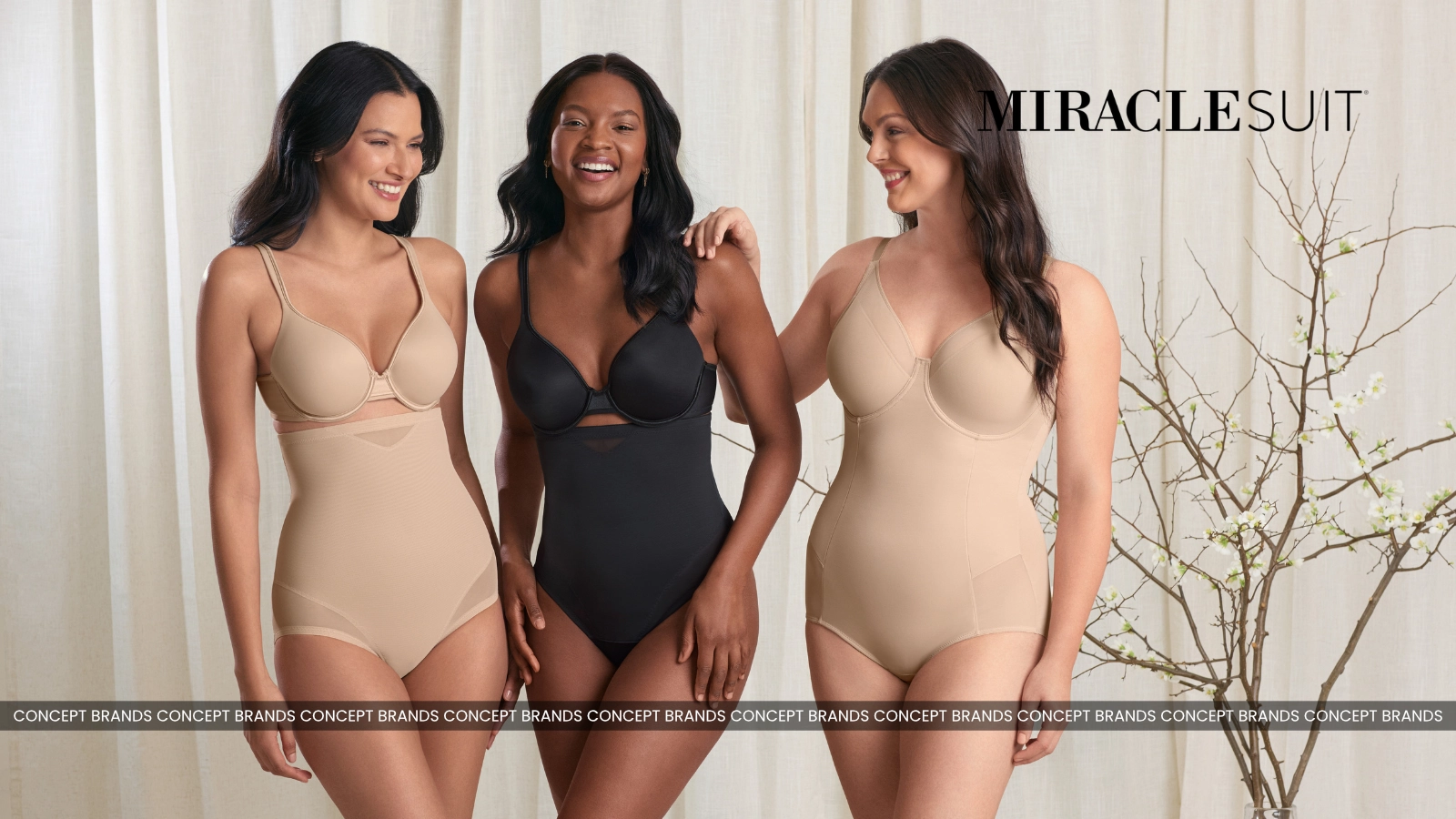
Home » Retailer Guide to Shapewear Compression Levels: Light, Medium & Firm Control
Not all shapewear is designed to do the same job. Some styles provide little more than gentle smoothing for everyday clothing, while others offer more structured support through the waist, abdomen, hips or thighs. At the strongest end of the category, firm control shapewear is engineered to provide truly noticeable figure-transformation beneath fitted or occasion-focused clothing (sometimes with added padding!).
For consumers, the difference between these products is not always obvious. Terms such as light control, medium control, firm control, smoothing, sculpting and shaping are widely used across the intimate apparel industry, but they are not standardised; one brand’s ‘medium control’ might be another brand’s ‘firm control’. In any case, customers don’t even always have a clear sense of the control level they really want.
That creates an important opportunity for lingerie retailers. Knowledgeable boutique owners or staff can help customers move beyond assumptions such as “tighter is always better” or “shapewear is uncomfortable and not for me”, to instead understand how different shapewear types fit and feel, and select the appropriate level of control for the outfit, occasion, desired result and personal comfort preference.
For lingerie boutiques, bridal boutiques, fashion retailers, department stores and eCommerce businesses, truly understanding shapewear compression levels has a clear commercial benefit: better product education can support stronger conversion, more confident fitting recommendations, improved online product descriptions, and a more strategically-balanced shapewear assortment.
This retail-focused guide explains the differences between light, medium and firm control, how each level can be positioned, and what you should consider when building out a premium shapewear category.
In practical terms, shapewear compression refers to how much support, resistance and visible shaping a garment is designed to provide.
Compression can be achieved, and varied, through a combination of:
However, there is an important point retailers should communicate clearly: there is no universal industry measurement that makes every brand’s “medium control” identical.
As experts in extra firm-control shaping, Miraclesuit’s medium-control bodysuit for example may feel firmer than a much cheaper brand’s style carrying the same general description.
This is why, as a retailer, you need to understand the specifics of each product you’re stocking rather than relying exclusively on the control level mentioned on the swing tag.
Customers sometimes assume that buying shapewear one or two sizes smaller will produce stronger compression, and hence a slimmer look. That is almost never the right approach!
Correctly-designed shapewear creates its intended level of control when worn in the appropriate size. Sizing down unnecessarily can lead to discomfort, rolling, digging, visible compression lines and difficulty moving or even just getting the piece on in the first place. If your customer isn’t getting the shaping she wants in a garment that fits well, the right solution is to try a different product.
Light-control shapewear sits at the most flexible end of the shaping spectrum. Rather than dramatically altering the silhouette, the goal is subtle smoothing.
For many consumers, this level of support is an introduction to shapewear because it feels closer to traditional underwear. It’s the kind of thing customers buy (or can be persuaded to buy) for regular everyday wear, rather than a one-off special occasion purchase.
Light compression can help:
The result both looks and feels natural rather than highly structured.
Light compression styles to consider adding to your assortment include:
Consider that customers will often buy these styles to wear all day, and on the regular – therefore, light & breathable fabrics, cotton gusset linings, and ease of laundering all hold greater importance.
Light-control shapewear can be particularly suitable for customers who want to wear the underwear for long periods and/or on a regular basis.
Typical uses include:
It can also suit customers who dislike the feeling of compression but still want a smoother foundation for a particular event.
Retailer Insight
Avoid describing light-control products as “weak”. That language can unintentionally position the product as inferior.
Instead, explain that light control has a different purpose: it prioritises flexibility, smoothing and extended-wear comfort. For the right customer, that may be exactly what they’re looking for.
Medium-control shapewear sits between subtle smoothing and stronger sculpting. For many retailers, this can be one of the most commercially-versatile parts of the category because it can work across both everyday and occasion-based wardrobes.
Medium compression may offer:
Customers should still be able to move comfortably, but they are likely to feel a clearer sense of support and notice more of a slimming effect.
A good medium-control compression assortment might offer:
Medium control can be a useful option under:
It can also work particularly well for customers who want one versatile shapewear garment that can transition between everyday and occasion dressing.
Retailer Insight
If a customer says, “I want shaping, but I don’t want to feel restricted”, medium control is often a sensible place to start the fitting process. From there, you can move onto lighter or firmer fits depending on their feedback, if necessary.
Firm control shapewear is designed for customers seeking more noticeable shaping and/or a stronger feeling of support. This category is frequently associated with occasionwear, and hence also often includes problem-solving silhouettes such as strapless.
However, “firm” should not equal uncomfortable. Educate customers that premium firm-control garments combine effective support with thoughtful construction, stretch, recovery and mobility; they’ll still feel more ‘held’ than in light/medium control options, but they should be able to move around without discomfort or excessive restriction.
Depending on the individual product, firm compression can provide:
The effect of course varies according to garment design; a firm-control brief or cincher focuses primarily on the tummy and waist, while a bodysuit provides more continuous shaping through the full torso, including smoothing over bra lines at the back.
Considering that customers often seek out firm-control shapewear when they have a particular event to dress for, consider an assortment that includes a range of silhouettes:
If your customer is asking about firm-control shapewear, chances are she’s not just dressing for everyday errands. She might be shopping for something to go under:
Retailer Insight
Firm control should be recommended according to the customer’s desired result – not simply because an event is important.
A bride, for example, may be wearing her shapewear for 10 or more hours. If medium compression provides sufficient smoothing with greater comfort, that may be the better choice. The strongest garment is not automatically the best garment.
For fitting teams and online product guides, a simple framework can help customers understand the category.
| Compression Level | Primary Purpose | Typical Clothing | Wearing Experience |
| Light Control | Gentle smoothing | Everyday clothing, office wear, travel looks | Flexible, easy for extended wear |
| Medium Control | Greater smoothing over more areas | Knitwear, party wear, office wear | More supportive while remaining versatile |
| Firm Control | Stronger shaping and sculpting | Bridalwear, formal clothing | More structured and supportive; a noticeably slimmer look |
This framework should be treated as a guide rather than an absolute rule. The actual fit, feel and results will vary between brands and individual garments.
One of the most valuable services a specialist retailer can provide is helping customers understand the difference in feeling between supportive compression and incorrect fit.
Except with some light control shapewear, the customer will feel the shaping effect on the body. The garment should feel secure, like a firm hug. However, it should never feel painful or like she can’t breathe properly.
Ask customers to:
A shapewear fitting conducted only while standing still can miss important comfort or fit issues.
Repeated rolling or slipping can suggest that:
This is especially important with medium and firm control shaping shorts. If a tight leg edge cuts noticeably into the thigh, that transition line will be visible through clothing, not to mention feeling uncomfortable.
Sizing up may be the solution; however, if the waist/tummy area is fitting well and it’s simply down to the customer’s waist to hip/thigh ratio, swapping to a longer-leg or laser-cut style may provide a cleaner result without losing the shaping benefit higher up.
The easiest way to improve your shapewear recommendations is to stop treating compression as the first question. Instead, train staff to begin with the customer’s objective.
A lightweight summer dress may require very different shapewear from a structured evening gown.
Understanding the outfit helps determine:
Ask specifically. Is their priority:
The clearer the objective, the easier the recommendation.
This is frequently overlooked. A customer attending a two-hour event may have a different tolerance for comfort or practicality (e.g. the inclusion or not of a gusset opening for using the bathroom) from someone wearing shapewear through an entire working day or wedding celebration.
Extended wear often makes fabric feel, breathability and freedom of movement all the more important!
Customers with no experience of shapewear may prefer starting with light or medium control. Someone familiar with structured foundations may be perfectly comfortable in firmer garments.
The strongest shaping solution is not always the smoothest solution. Under thin satin, for example, a lightweight seamless bodysuit may produce a better visual result than a heavily constructed firm-control garment which has visible lines from boning, zippers and sculpting seams.
One of the developments in premium shapewear is a move towards more targeted construction. Instead of applying uniform pressure throughout the entire garment, today’s higher-end styles use different levels of structure in specific zones. For example, firm abdominal support but greater flexibility through the hips. This approach can improve both comfort and performance.
For retailers, these construction details matter because they provide meaningful points of differentiation between mass-market and premium shapewear. A customer is more likely to understand the value of a higher-quality garment when the retailer can explain how it has been engineered, not simply that it costs more.
Premium shapewear positioning can help specialist retailers move the category beyond price-based selling.
Higher-quality products may be differentiated through:
These attributes can be particularly important in firm control shapewear, where poor construction can quickly become unbearably uncomfortable.
As a lingerie retailer, you therefore have an opportunity to upsell premium shapewear through education. Instead of simply saying, “this is our firmest style”, a stronger sales pitch might be, “this style provides firm abdominal support at the front, but the side panels have more flexibility, so you still have comfortable movement to twist and bend”.
Digital commerce continues to influence how Australian and New Zealand consumers shop for apparel and intimate products.
Australia Post reports that Australians spent $82.6 billion online in 2025, up 14% year-on-year, while 82% of Australian households shopped online during the year. Shoppers are also becoming more value-conscious, with 81% saying they shop around for deals.
New Zealand’s online retail market also expanded significantly. NZ Post reports that online spending exceeded NZ$12.7 billion in 2025, up 10% year-on-year, with domestic retailers growing at more than twice the spending-growth rate of international competitors.
For shapewear retailers selling online, this makes product education increasingly important. A customer cannot physically compare light, medium and firm compression when viewing three product pages online. Your website has to explain the difference.
If you want to take it one step further and really outshine your competitors, add before + after photos to illustrate the level of difference the customer can expect. Even better, include video content that shows the stretch and recovery of the fabric up close, as well as clearly illustrating any interior details such as boning, targeted panels, and seam construction.
This also creates an SEO opportunity; instead of using only generic manufacturer copy, specialist retailers can provide original explanations that answer genuine customer questions. Google’s current guidance emphasises helpful, reliable, people-first information and identifies expertise as a factor that can help you rank well, if you can get that expertise across well via your digital content.
Genuine fitting expertise and advice is therefore an asset well worth publishing!
The commercial language around shapewear matters. Modern consumers may buy shapewear for many reasons:
You’ll therefore be appealing to a wider range of customers if you move away from narrow language that treats shapewear exclusively as a product designed to make someone look smaller.
A solution-based conversation is more inclusive and more useful. Instead of asking, “how much do you want to hold in?”, try, “where would you like additional support or smoothing?”. That small change helps position you as a fitting specialist rather than simply a product seller.
Make light, medium and firm control easy to identify both online and in-store. Customers should not need to interpret technical product descriptions to understand the basic difference.
Where the eCommerce platform permits, allow customers to filter products by, at minimum, control level. Additional filters could include body area, garment type and outfit use. This can make a large shapewear category easier to shop.
A permanent educational page explaining shapewear compression levels can support both SEO and sales conversion. Link to it from relevant product and category pages.
Teach teams to ask:
This creates a better recommendation than simply asking whether the customer wants light, medium or firm control.
A strong shapewear assortment should not consist entirely of firm-control garments. Your assortment needs to provide solutions across everyday smoothing, versatile medium support and stronger occasion shaping.
Because terminology is not completely standardised, staff should physically assess products where possible. Perhaps arrange a staff try-on event, so they get first-hand experience with the product.
If one brand’s medium style feels closer to another brand’s firm control, that knowledge should be incorporated into customer recommendations.
Online, use ‘wear this with’ product recommendations to connect shapewear to relevant outerwear purchases. For example:
Fitted dresses: medium or firm shaping options.
Work trousers: light or medium smoothing.
Bridalwear: medium or firm control, with silhouettes based on gown construction (strapless, plunge, low back etc.).
Everyday knitwear: seamless light-control products.
This turns compression education into practical retail cross-selling.
For buyers, the important question is not simply how many shapewear SKUs are available. It is whether the range covers enough customer needs. A commercially useful assortment should typically include all of the following:
For everyday smoothing, comfort-focused customers and lightweight clothing.
For customers seeking noticeable support without highly structured compression.
For fitted garments, occasionwear and customers who specifically want stronger shaping.
Think beyond shaping briefs, shorts, bodysuits and camisoles to also consider:
A diverse premium portfolio allows you to serve a wider range of needs while avoiding excessive duplication.
When it comes to shapewear compression levels, more is not automatically better.
Light control provides gentle, flexible-feeling everyday smoothing.
Medium control offers a versatile balance between comfort and noticeable shaping.
Firm control shapewear provides stronger, more structured support for customers who want a truly nipped, tucked and sculpted foundation.
The correct choice depends on the customer, garment, occasion and desired result.
For lingerie and fashion retailers, that creates an opportunity to add genuine expertise to the purchasing process. Customers can find thousands of shapewear products online; what is more difficult to find is clear guidance explaining why one garment may work better than another in a particular scenario.
Retailers that understand compression, construction, fit and outfit compatibility can turn shapewear into a valuable specialist category – supporting customer trust, premium positioning and stronger long-term retail relationships.
A successful shapewear assortment should give customers genuine choices across control levels, garment constructions and wearing occasions.
Concept Brands works with lingerie boutiques, fashion retailers, department stores and eCommerce businesses across Australia and New Zealand, providing access to globally recognised premium brands including Miraclesuit Shapewear, Leonisa, Naomi & Nicole, Cupid Shapewear and more.
Ready to expand or strengthen your premium shapewear category?
Contact Concept Brands or become a customer via the B2B portal, and let’s discuss the right product mix for your business:https://b2b.conceptbrands.com.au
Shapewear is commonly described as light, medium or firm control. Light compression generally focuses on gentle smoothing, medium control provides more noticeable shaping and support, and firm control offers the most structured, transformative level of compression. Exact results/performance however varies between brands.
Firm control shapewear is designed to provide a very secure-feeling fit that noticeably slims and smooths the target areas. It may also include features such as butt-lift bands to visibly transform the silhouette.
Not necessarily. The best compression level depends on the customer’s desired result, outfit and comfort requirements. A lightweight dress, such as a silk one, may look better with subtle seamless smoothing below, while fitted occasionwear may benefit from a more structured garment that also supports the back and lifts the bust, for example.
It can be. Many customers find medium control useful because it provides noticeable support without feeling as structured as firm-control shapewear. Comfort varies between products and individuals, so fit should always be assessed.
Medium and firm control shapewear should feel like a firm hug, but it should not cause pain or severely restrict normal movement. Customers should be able to sit, walk, move and breathe comfortably.
Unless the brand is known to fit large, no. Customers should follow the manufacturer’s sizing guidance. As well as the risk of discomfort, buying shapewear too small can cause rolling/digging and visible compression lines which can actually make an outfit look worse, not better.
Medium or firm control can work well under fitted dresses when more noticeable smoothing is desired. However, fabric thickness, dress construction and seam visibility should also influence the choice.
Light or medium control is often suitable for workwear because these levels create a more polished look through smoothing, but are still comfortable enough for extended wear.
Product pages should explain the compression level, target support areas, garment construction, recommended clothing, fit, sizing and wearing experience. Explaining light, medium and firm control – rather than simply stating them – can make online purchasing considerably easier, increasing customer confidence and boosting sales.
Customers have different wardrobes, comfort preferences and shaping goals. Offering multiple compression levels allows retailers to provide more personalised recommendations rather than trying – unsuccessfully – to solve every need with one type of shapewear.
Retailers across Australia and New Zealand can access exclusive premium shapewear brands and other intimate apparel categories via Concept Brands. To view wholesale options, register for B2B access or contact the Concept Brands team at https://b2b.conceptbrands.com.au.