Home » The Psychology of Intimates: How to Curate Products That Resonate
Walk into any premium lingerie boutique and it won’t be long before you see the same process play out: a customer picks up a bra, puts it down. Picks up another one, holds it for a moment longer. Moves to a third. Returns to the second. You can see a decision being made at a level that has little to do with price tags or fabric contents.
That is because higher-end lingerie purchases are largely driven by emotion, not logic.
No other retail category sits at the intersection of function, emotion and self-perception the way lingerie does. The customer buying herself a fancy bra is simultaneously solving a practical problem and making a statement about how she sees herself or wants to feel in her own skin. Those two motivations operate at different levels of consciousness, often in tension with each other, and understanding how they interact is the difference between a wholesale range that converts reliably and one that looks good on the floor but underperforms at the register.
This article is written for buyers, category managers and boutique owners who want to move beyond instinct and develop a data-informed, psychologically-grounded product curation strategy. Understanding why your customers buy intimate apparel — the emotional triggers, the self-perception dynamics, the role of occasion and life stage, and the specific way trust operates in this category — is the most powerful wholesale briefing tool available. When you know what drives the decision, you know what to stock, what depth to buy, and which brands will earn loyalty versus those that will only produce one-off transactions.
The Australian and New Zealand lingerie consumer has changed significantly over the past five years. Post-pandemic purchasing behaviour shifted meaningfully toward quality and intentionality across almost all discretionary categories — but the shift was particularly pronounced in the lingerie industry.
Several drivers are relevant for wholesale buyers to understand:
The “investment piece” reframe. ANZ consumers increasingly approach premium lingerie the way they approach premium skincare or quality footwear, which is to say as an investment in daily wellbeing rather than a luxury indulgence. This reframe has significant commercial implications for retailers: customers buying with this mindset are less price-sensitive, more brand-loyal, and more likely to replace worn products with the same label rather than defaulting to a cheaper alternative. They are buying less frequently but spending more per transaction.
The self-care purchase driver. Lingerie has become explicitly embedded in the self-care narrative that dominates female consumer culture in both Australia and New Zealand. The customer who buys a beautifully-made set is not always buying it for a specific occasion. She is buying it for herself, to be worn on a Tuesday under work clothes that no one else will see. This has materially expanded the addressable market for premium intimate apparel beyond special occasion and gifting — it is now an everyday wellbeing category for a significant and growing segment of the ANZ market.
Digital discovery, physical purchase. The majority of premium lingerie purchases in Australia and New Zealand are still made in physical stores, but now, the discovery journey starts online. A customer walks into your boutique having already researched the brand, seen the product photographed on a body like hers, and formed a strong preference. This behaviour elevates the role of brand recognition and wholesale brand selection in driving foot traffic. Stocking brands customers have already decided they want is a more powerful conversion tool than any in-store promotional strategy designed to convince them to buy something they’ve only just come across.
The most commercially useful way to think about lingerie purchasing psychology is through the lens of motivational states. Every customer who enters your store — or lands on your product page — is in one of four such states, each of which responds to a different product signal and requires its own unique product curation strategy.
This customer’s primary motivation is resolution of discomfort. She is wearing the wrong size, a garment that has worn out, or a style that never worked properly but she tolerated it until she got fed up. Her purchase is driven by relief rather than aspiration. She is not particularly brand-loyal yet — she is open to recommendation — and she is a high-conversion prospect because she has a defined problem and is actively looking to solve it.
The wholesale curation implication: Comfort seekers are converted by fit confidence and technical credibility. The brands that perform best with this customer have clear fit language, well-engineered construction, and a size range deep enough to actually solve her problem. Stocking brands with known fit reputation — and training floor staff to speak fluently about the engineering — is more important than visual merchandising with this customer segment.
This customer is not solving a problem, she is adding to her wardrobe because she wants something that reflects who she is or who she wants to be. She is motivated by aesthetics, brand identity and the emotional resonance of a product. She is willing to pay a premium for something that ‘feels right’, and she is the most likely of all four segments to cross-buy — to add a matching bottom, a complementary piece, or a second colourway to her basket.
The wholesale curation implication: Self-expression buyers are driven by brand narrative and aesthetic range. They respond to brands with a distinct visual identity, fashion credibility and the kind of craftsmanship detail (the lace placement, the hardware, the colourway…) that signals genuine design investment. They are not motivated by functional language; they are motivated by brand aspiration. For this segment, the brand you stock is what you’re selling.
This customer has a specific context: a holiday, a special event, or a life milestone. Her purchase timeline is defined, her budget tends to be higher than average, and she is in a heightened emotional state that makes her particularly receptive to suggestion and cross-selling. A customer making a gift purchase also fits into this category — they’re buying for someone else with their own fit or comfort judgment as the filter.
The wholesale curation implication: Occasion buyers drive seasonal spikes and are the primary driver of premium price points in the gifting context. Seasonal inventory planning should account explicitly for this segment: Valentine’s Day, Christmas/summer, and mid-year gifting windows such as Mother’s Day see disproportionate spend from occasion buyers. Stocking gift-ready presentations, sets (not just separates), and clearly premium products — box-quality items, distinctive packaging, recognisable brand names — converts this segment reliably.
This is the highest-value customer in your store and yet the one most retail buying strategies underserve. She already knows what she wants. She already has a brand, a style, a size and a colour preference, and she is returning because it wore out or because she wants another one. Her conversion is essentially guaranteed if you have the product in stock. Her churn risk — the probability that she redirects her spend to a competitor — is entirely driven by stock availability.
The wholesale curation implication: Loyalty repurchasers require replenishment depth and restocking reliability above all else. The worst commercial outcome for this customer segment is arriving at your store or landing on your website and finding her product is out of stock. The second worst outcome is finding it has been discontinued without a clearly-highlighted replacement option. Both drive permanent customer loss. Building your wholesale buying strategy around reliable restocking — not just initial buy excitement — is how you protect this segment. If it’s out of stock but you’re able to say or display “Delivery in 2 weeks”, you may just save the sale.
Trust in most retail categories is earned through visible signals such as store presentation, price positioning, and staff knowledge. In lingerie however, it operates at a more fundamental level, because the purchase is physically intimate – literally worn against the body – and the consequences of getting it wrong (discomfort, poor fit, a popped underwire) are more immediately felt than in almost any other category.
This creates a premium on brand reputation that is stronger in lingerie than in most adjacent fashion categories. A customer will try a dress from a new brand on moderate recommendation. She is far less likely to try a new bra brand unless she has a meaningful signal of quality — a friend’s recommendation, a brand she has researched, or a retailer she trusts to guide her correctly.
The commercial implication for wholesale curation is direct: stocking unknown or unverified brands at an attractive wholesale price is a false economy in this category. The short-term margin advantage of a cheaper wholesale price is eroded by higher return rates, lower repeat purchase, and — most damagingly — the loss of trust with customers whose poor experience reflects on the retailer, not the brand they have had no prior relationship with.
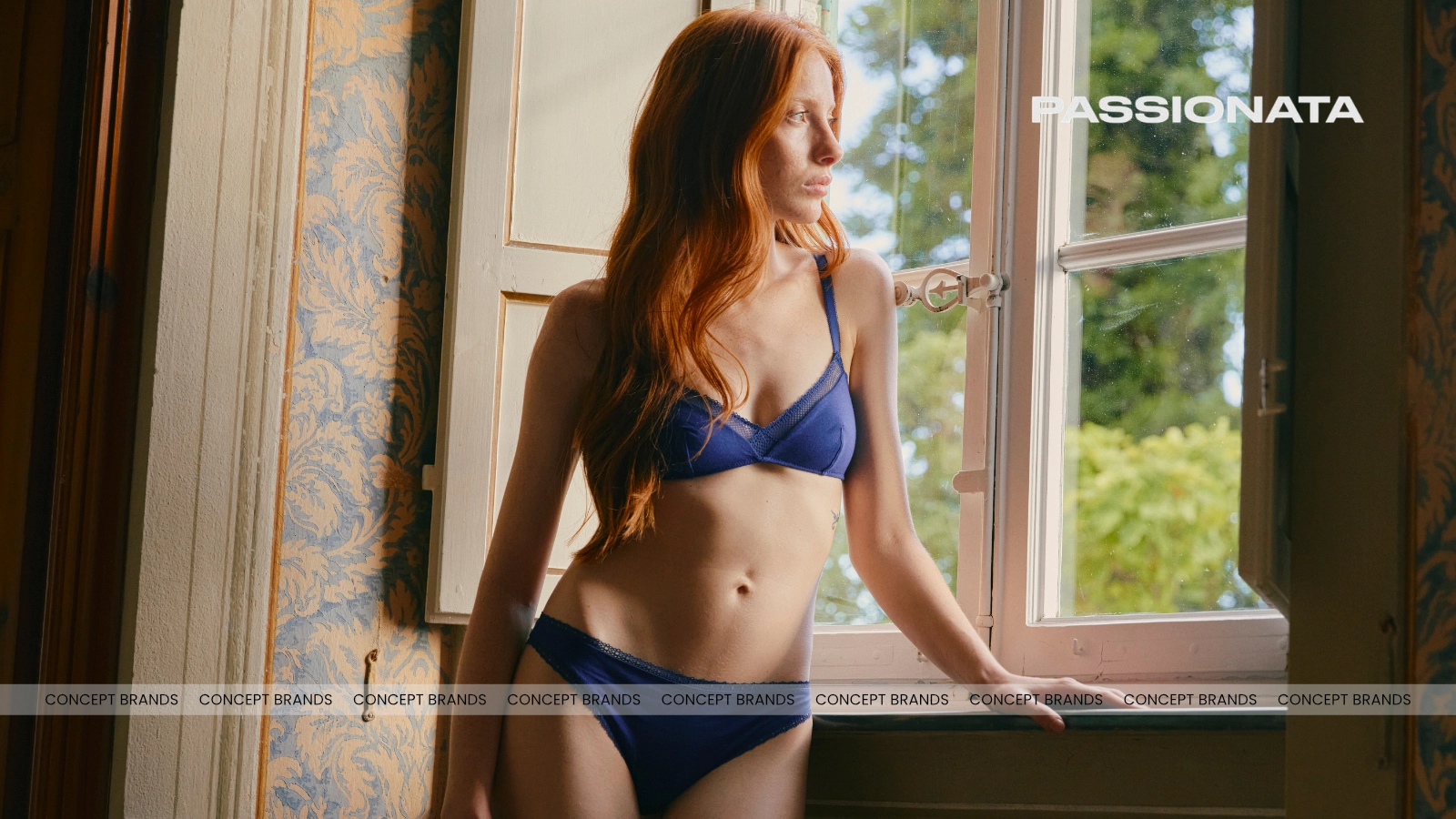
Premium wholesale brands bring their own trust equity to your store. A customer who has worn Natori, Passionata or Naturana before and had a good experience will walk into your boutique looking for those names, or at least recognise and trust them. That immediate brand recognition is a conversion tool that no promotional strategy can fully replicate.
A boutique that stocks only for the self-expression buyer will underserve the comfort seeker and miss the loyalty repurchaser entirely. A range built only on replenishment basics will have nothing for the occasion buyer and nothing to aspirationally upgrade the comfort seeker when she has solved her immediate problem. The commercially optimal wholesale range serves all four segments, with explicit buying decisions made for each.
In practical terms, this means your wholesale buy should include:
Understanding customer psychology also shapes how you merchandise the wholesale range on the floor. Products that serve the comfort seeker and the loyalty repurchaser should be easy to find, clearly organised by size, and supported by staff who can navigate directly to the right product without lengthy exploration. Products for the self-expression buyer should be displayed with visual context — styled, lit, presented in a way that activates the aspiration that drives her purchase. Occasion products should be visually elevated and separated from the everyday range, with clear gifting framing.
The floor layout is, in effect, a routing map based on motivational state. Getting customers into the right section quickly — and then into a fitting room with products appropriate to their state — is how strong conversion happens.
Different motivational states peak at different times of the year. In the ANZ market:
Seasonal inventory planning built on this motivational framework will produce better sell-through, fewer markdowns, and more consistently-strong performance across the calendar than a planning approach built purely on product trend cycles.
Lower-priced intimate apparel brands can compete on the functional dimension — they can deliver an acceptable bra at an accessible price point. What they cannot replicate is the psychological value that premium brands deliver across all four motivational states.
For the comfort seeker, premium brands deliver engineering confidence — the customer trusts that the fit will work. And in the fitting room, the difference is clear. For the self-expression buyer, premium brands deliver the brand narrative and aesthetic quality that makes the purchase feel like an expression of identity. For the occasion buyer, they carry the perceived value and gift-readiness that makes them the right choice for a meaningful purchase. And for the loyalty repurchaser, they deliver the consistency and longevity that makes a repeat purchase the obvious decision, even if the price tag is a little higher.
At every motivational state, the premium brand converts better, retains the customer longer, and produces a higher lifetime value. The wholesale price differential is real — premium brands naturally cost more to stock — but the margin economics of the premium segment, combined with the customer retention advantage, produce a better commercial outcome than lower-cost alternatives at higher volume.
Translating psychological insight into smart buying decisions requires wholesale access to brands that have been selected for their commercial performance in the ANZ market specifically, not just global brand recognition. The brands that resonate best with consumers here are the ones with not just a great fit reputation and genuine size depth, but also reliable local supply chains, and an aesthetic range that maps to local consumer taste.
Concept Brands is the authorised wholesale distributor for a portfolio of premium international lingerie brands across Australia and New Zealand. Our broad but tightly-curated product assortment is built on exactly the commercial criteria outlined in this article — brands that activate purchasing psychology, styles that produce repeat purchase, and seamless replenishment availability that gives retailers a genuine competitive advantage in their local market.
Register on the Concept Brands B2B wholesale platform at b2b.conceptbrands.com.au to browse the full wholesale catalogue, review seasonal collections, and place your next bulk order with confidence.
Not registered yet? Contact our wholesale sales team to discuss your store’s customer profile and get personalised brand recommendations based on your market and your shoppers’ motivational mix.
What is the psychology behind intimate apparel purchasing?
Intimate apparel purchasing is driven by a combination of functional need, emotional state, self-perception, and brand trust — operating simultaneously and often at different levels of the customer’s awareness. The four primary motivational states are: comfort resolution (solving a fit or comfort problem), self-expression (reflecting personal identity through aesthetic choice), occasion purchasing (buying for a specific context or as a gift), and loyalty repurchase (returning to a trusted brand or product). The most effective wholesale lingerie curation addresses all four states within a coherent range.
How does understanding customer psychology improve wholesale buying decisions?
When buyers understand the motivational state driving a customer’s purchase, they can make more precise stocking decisions — not just which brands or products to stock, but also at what depth, in which size range, and when to have seasonal stock availability at its peak.
Psychology-informed buying reduces over-stocking of aspirational products that have no functional base, and under-stocking of the replenishment products that drive repeat business. The result is better sell-through rates, lower markdowns, and stronger customer retention.
Why does brand trust matter more in lingerie than in other retail categories?
Intimate apparel is worn right against the body, and the consequences of poor fit or garment failure are immediately felt. Customers are therefore significantly more risk-averse when trying unfamiliar brands in this category than in most adjacent fashion categories. Established premium brands bring their own trust equity to a retailer’s floor — a customer who recognises a brand name and has a positive history with it, or has heard great things about it, will convert without the persuasion required for an unknown label.
How should seasonal planning reflect the psychology of lingerie purchase?
Different motivational states peak at different times of year. October–December is the peak occasion and gifting window, requiring premium sets and gift-ready products at maximum depth. January–March sees a comfort-seeker surge as customers reset after summer. May–July is the ANZ mid-year gifting peak, driven largely by Mother’s Day. August–September is the self-expression buyer’s pre-summer wardrobe refresh. Planning wholesale buys against these motivational peaks produces better sell-through than trend-cycle-only planning.
What types of wholesale brands perform best for each customer’s motivational state?
Comfort seekers and loyalty repurchasers respond best to brands with strong fit engineering, clear technical credentials, and reliable restocking. Self-expression buyers are activated by brands with distinct aesthetic identity, a seasonal fashion range, and strong brand narrative. Occasion buyers convert on recognisable premium brand names with gift-appropriate presentation. A balanced wholesale portfolio addresses all four states with appropriate brand selection for each.
How do I access premium intimate apparel brands wholesale in Australia and New Zealand?
Concept Brands is the exclusive wholesale distributor in Australia and New Zealand for a curated portfolio of premium international lingerie and swimwear brands. Retailers can register and place wholesale orders through the B2B portal at b2b.conceptbrands.com.au. The platform provides access to core and seasonal collections, live stock availability, and direct support from the Concept Brands wholesale sales team.