Home » Maternity and Teen Bras: Two Niches Retailers Shouldn’t Overlook
Most lingerie retailers in Australia and New Zealand operate with a relatively predictable buying strategy – core everyday bras, a seasonal fashion assortment, and perhaps a small selection of shapewear or sleepwear. It’s a safe approach. But being overly safe can come at the cost of profitability.
The retailers consistently outperforming their competitors aren’t just stocking better products. They’re stocking smarter products – specifically, categories where demand is high, competition is thin, and customer loyalty is almost guaranteed once you get the fit right. Maternity bras and teen bras are two of those categories.
Today, we’re sharing some tips to successfully slot these two product types into your wholesale buying strategy. If you’re a lingerie boutique owner, category manager or apparel buyer looking to expand margins and reduce category gaps in your store, they deserve serious inventory consideration. Read on to find out exactly why, and how to approach them commercially.
Australia and New Zealand’s lingerie retail market is maturing fast. Consumers are more brand-aware, fit-literate and quality-conscious than at any previous point in modern history. The post-pandemic reset pushed a significant number of shoppers away from fast fashion intimates and towards products that genuinely perform – a behavioural shift that has benefited premium and mid-premium lingerie stores considerably.
But market maturity cuts both ways. As mainstream bra categories become increasingly competitive – with department stores, fashion chains and online players all fighting for the same customer – boutique retailers and independent stores face real margin compression at the everyday tier.
The strategic answer isn’t to compete harder in crowded categories. It’s to identify underserviced niches where purchase intent is high, average transaction values are strong, and the specialist expertise of an independent retailer is genuinely valued by the shopper.
Maternity bras and teen bras are two examples of precisely those niches!
Australia records approximately 300,000 births per year. New Zealand adds roughly 60,000 more. Every one of those pregnancies drives at least one (but typically two to four) new maternity or nursing bra purchases, often at a premium price point because fit and comfort are simply non-negotiable at this moment in life.
On the teen side, the adolescent intimate apparel market is consistently underrepresented in retail lingerie floors, despite the fact that fitting teens with the right bra – particularly a first bra or early-stage bra – creates some of the strongest brand loyalty of any customer segment. A teenager who has a positive first experience in your store often becomes a repeat customer well into adulthood.
Both segments represent a significant addressable wholesale opportunity – one that most retailers are leaving on the table.
Understanding the source of your reluctance to stock these categories is the first step to overcoming it. Most retailers who avoid maternity and teen bras do so for one of three reasons:
Complexity of fit. Both categories require staff training and expanding your size range beyond the standard. Retailers who lack confidence in serving these customers often default to not stocking the category at all – handing that revenue directly to a competitor or a major online retailer.
Inventory risk perception. Buyers sometimes perceive specialist categories as low turnover. This is largely a myth driven by poor brand selection and insufficient depth of buy. When the right brands are stocked in the right depth, both maternity and teen bras move consistently throughout the year.
Wholesale sourcing difficulty. Many retailers simply don’t know where to access high-quality, commercially-tested, brand-backed products in these categories at good wholesale pricing and with reliable supply.
All three barriers are solvable. Concept Brands exists precisely to solve the third one, which in turn resolves the second, while various online and in-person training options exist to fix the first. Don’t neglect to speak to the brands themselves about how best to fit their products – after all, they are the experts!
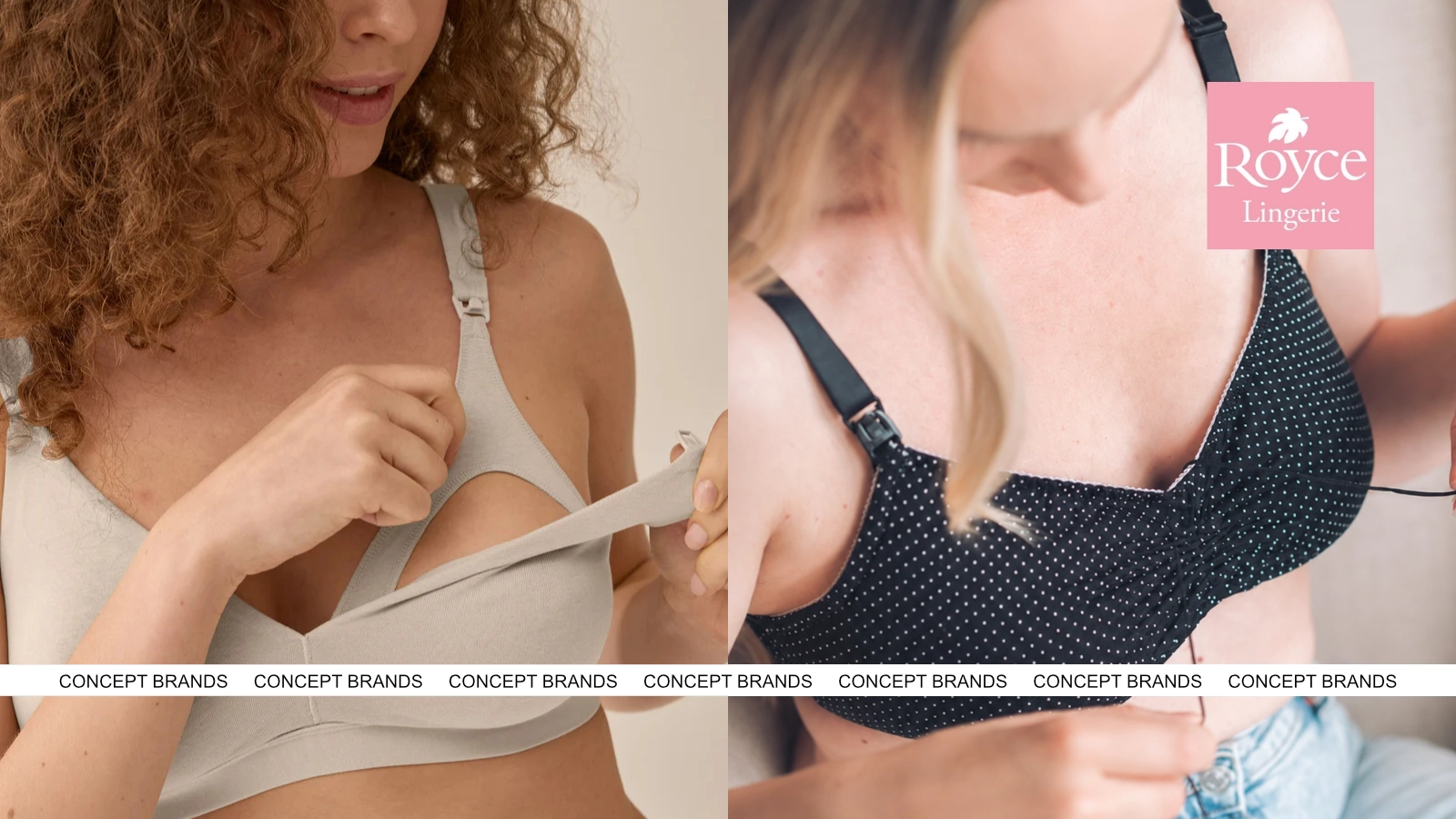
Maternity bras tick a commercial box that most lingerie categories struggle to match: they are need-based purchases. A pregnant or nursing customer is not browsing aspirationally. She needs a bra that fits and functions, and she needs it now. This drives higher conversion rates in-store, stronger average transaction values, and lower price sensitivity compared to fashion-led purchases.
Key reasons to stock maternity bras include:
A commercially-sound maternity bra assortment should cover three distinct purchasing moments:
During pregnancy: The priority is adjustability and comfort. Soft cup, wirefree styles in fabrics with genuine stretch and recovery – not just loose fit – are essential. Size range is critical; a maternity bra assortment that only runs to a D cup will generate dissatisfied customers and returns. Invest in depth across the D-G cup range in particular.
Nursing and postpartum: Customers are specifically looking for drop-down or pull-away cup functions, single-handed operation, and smooth inner linings that won’t aggravate sensitivity. Practical, yes – but the best wholesale brands in this space have solved the aesthetic challenge too. Modern nursing bras are not the utilitarian garments they once were, and the retailers who communicate this differentiation will win the sale.
Transition bras: The bridge between nursing and everyday wear. Many postpartum women are shopping in a new size, not going back to the one they wore pre-pregnancy, and want comfort without looking like they’re still in maternity mode. Soft cup, wirefree styles with added style points, such as a bold colour or lace detailing, transition effectively into this role.
Unlike fashion lingerie, maternity bra demand doesn’t spike seasonally – births occur year-round. This makes maternity an excellent inventory anchor: a category that generates consistent weekly sales rather than seasonal peaks and troughs.
Plan a core maternity assortment of two to three key styles per trimester phase, with at least two colourways per style, and replenish based on weekly velocity rather than seasonal pushes. Buying through a reliable wholesale distributor with consistent stock availability (that’s us!) is non-negotiable for this approach to work.
The adolescent bra market is one of the most underserviced in the ANZ lingerie retail landscape. Most mainstream retailers offer a token selection – often poorly sized, limited in range, and not merchandised with any genuine understanding of the customer. Independent lingerie retailers have a significant opportunity to own this category locally, and the lifetime value argument is compelling.
A teenager who is properly fitted, treated with respect and guided to a bra that genuinely works for her body and her lifestyle will remember that retailer. She will return when she needs her next size. She will return when her tastes evolve. She may even invite her friends to join her. And if she stays local, she’ll keep coming back long after she’s outgrown your teen range. The average lifetime retail value of a customer acquired at age thirteen to seventeen, if the first experience is handled well, is considerable.
This is one of the strongest arguments for investing in this category from a wholesale buying perspective: the cost of acquisition is low (she’s local, she has a specific need), and the lifetime return is high.
Teen bras are not simply adult bras in smaller sizes. Retailers who get this category right curate a selection that’s engineered for:
The how matters as much as the what. Teen bras merchandised alongside adult lingerie send the wrong signal to both the teen customer and her parent. Create a clearly delineated section – call it a “first fit” or “early essentials” area – with age-appropriate imagery, approachable signage and a clear size-finding guide.
Stock a compact, well-edited range of two to three hero styles across multiple colourways rather than a deep but confusing assortment. Train staff specifically in fitting teens: sensitivity, clear communication and involving the parent appropriately without making the experience feel clinical.
The fitting experience is the product in this category. Get it right and you may have a customer for twenty years!
Across both maternity and teen bras, one pattern is consistent: premium brands outperform lower-priced alternatives on sell-through, customer satisfaction and return rate reduction.
The reason is functional, not aspirational. In categories where fit is technically demanding – and both maternity and teen bras qualify – cheaply-engineered products fail their customer. Poor fit in a nursing bra is uncomfortable and even potentially problematic. Poor fit in a teen’s first bra creates a negative association with the category, and by extension the retailer.
Retailers who stock genuinely well-engineered brands in these categories see:
Premium brands have also invested in the supply chain infrastructure – consistent sizing, reliable restocking and broad size depth – that specialist categories demand. This is a wholesale consideration as much as a retail one: a premium brand that can guarantee a G-cup nursing bra in stock on reorder is worth considerably more to your business than a cheaper alternative that regularly goes out of stock.
Resist the instinct to stock a wide variety of brands or styles ‘to see what works’ when entering a new specialist category. The better approach is to identify two to three hero styles per category that come with excellent reviews and a long list of USPs, stock them in genuine depth across the relevant size range, and build from there once you understand your local customer’s preferences. Broad but shallow buys produce disappointing sell-through and the illusion that the category doesn’t work in your store.
Your wholesale investment in these categories will underperform if your floor staff cannot speak to the product with confidence. Specifically for maternity and teen bras, product knowledge and fitting skill are commercial differentiators. Ask your wholesale distributor for brand training, product education materials and/or fitting guides. The best wholesale partners – including Concept Brands – provide this as part of the trading relationship.
Both maternity and teen bras are relatively non-seasonal categories. Build a replenishment model rather than a seasonal push model. Maintain minimum stock levels on core styles and simply replenish as it sells. This requires a wholesale supplier with reliable stock availability – another reason brand selection and distributor relationship matter as much as initial product selection.
Retailers operating through established wholesale portals such as Concept Brands’ online B2B platform can review stock availability in real time, place replenishment orders efficiently, and access new season products early. If you’re not currently using a B2B wholesale platform to manage your lingerie buying, you’re likely making decisions on less information than your most competitive peers.
Here is the commercial reality for independent lingerie retailers in Australia and New Zealand: the mass market isn’t going to solve the maternity or teen bra problem for your local customer. Department stores underinvest in category expertise. Online retailers can’t guarantee the perfect fit. Fast fashion brands don’t engineer for specialist fit demands at all.
The independent lingerie retailer who commits to these categories – who invests in the right wholesale brands, trains staff properly, merchandises with intention, and builds a local reputation as the destination for maternity bras and first-fit teen bras – will own that customer for the long term.
Concept Brands is Australia and New Zealand’s authorised wholesale distributor for a curated portfolio of globally-recognised premium intimate apparel brands. Our wholesale catalogue includes brands specifically suited to both maternity and teen bra categories – products that have been commercially tested, are available in genuine size depth, and are supported by product training and retail resources.
If you’re serious about growing your lingerie category performance in 2026 and beyond, these two niches are worth your immediate attention – and we’re ready to help you stock them right.
Register on the Concept Brands B2B wholesale platform at b2b.conceptbrands.com.au to browse our full wholesale range, check live stock availability and place your first order with no minimum quantity requirements.
👉 Access the B2B Wholesale Portal – b2b.conceptbrands.com.au
Maternity bras are need-based purchases with high conversion rates, strong repeat purchase frequency, low promotional pressure, and low cost sensitivity. Australian births alone generate approximately 300,000 potential maternity bra customers annually, with each customer typically purchasing multiple bras across her pregnancy and postpartum period.
Yes – and significantly underserviced. The teen bra market in ANZ is poorly covered by mainstream retail, creating a clear opportunity for independent lingerie boutiques and specialist retailers to own the category locally. The lifetime customer value of a teen shopper acquired through a quality first bra fitting experience is one of the strongest in the category.
Prioritise size depth over breadth of style. A maternity assortment that covers C or D through G cup on a wide range of band sizes in just a few styles, will outperform a wider style selection in a narrower size range. Choose wholesale brands with reliable restocking capability, as maternity is a year-round category requiring consistent replenishment.
Premium teen bra brands are engineered specifically for developing bodies, which means softer construction, narrower band proportions relative to cup size, gentle padding intended for coverage rather than enhancement, and age-appropriate aesthetics. Standard adult bras scaled down do not provide the same fit accuracy, comfort or aesthetic appeal, which is why brand selection at the wholesale level matters significantly in this category.
Concept Brands is an authorised wholesale distributor of premium international lingerie brands such as Royce Lingerie. Retailers can register and place orders through the B2B portal at b2b.conceptbrands.com.au to access the full wholesale catalogue, check stock availability, and build their specialist bra assortment.
Absolutely. These categories don’t require a large floor footprint. A well-edited, depth-focused assortment of two to three hero styles per category – merchandised correctly – can generate disproportionate revenue and loyalty for boutique stores compared to the floor space invested.
Minimum order quantities vary by brand and distributor. Concept Brands does not require any minimums, giving you the flexibility to test launch new products without large financial commitments, and replenish ad-hoc throughout the year. Our sales team will be happy to advise on recommended minimum size runs.