Home » Lingerie as Outerwear: How the 2026 Trend Is Changing What Customers Buy
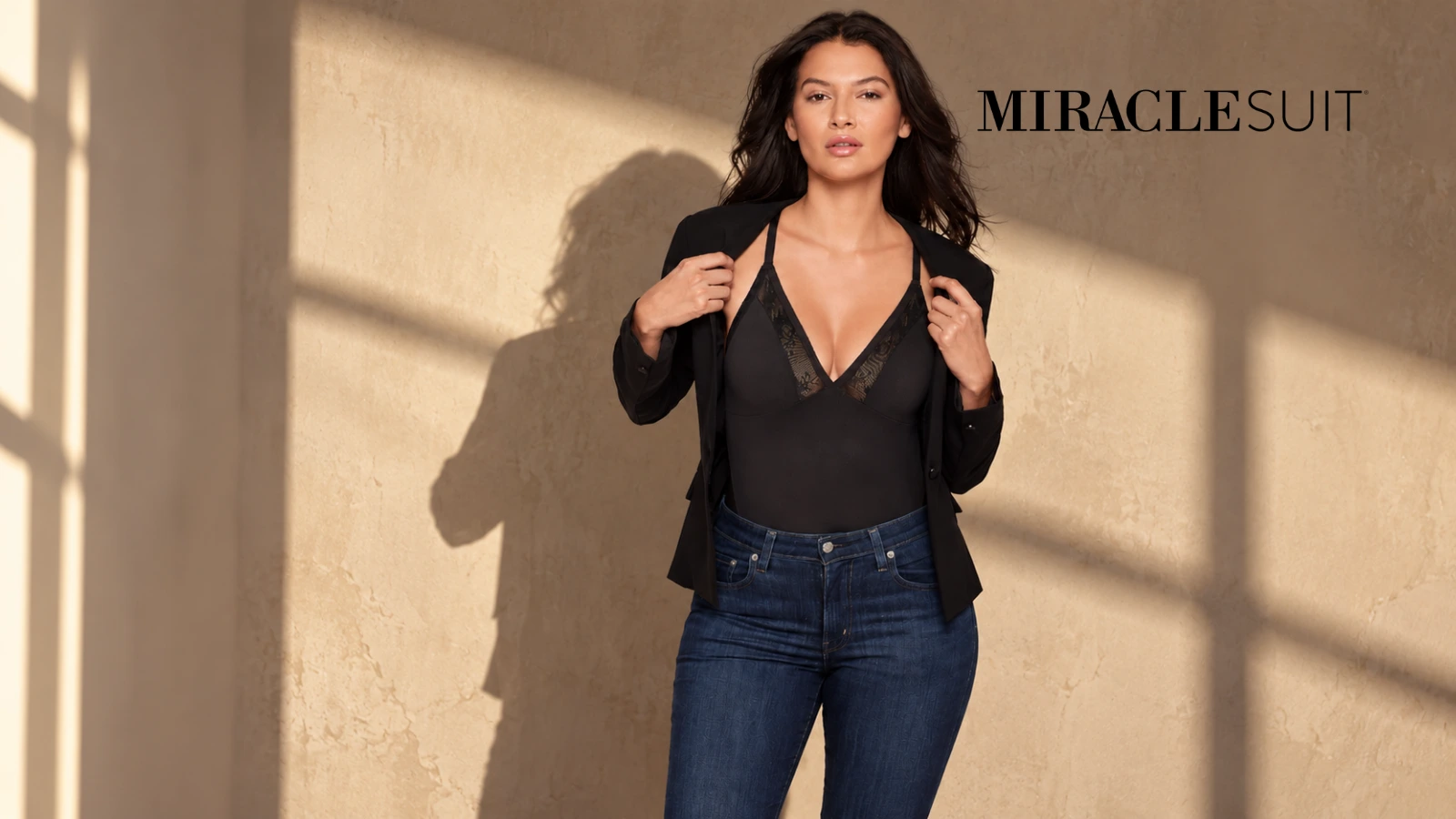
Lingerie is becoming ever-more visible in 2026. Bralettes sit beneath open shirts and tailored jackets. Bodysuits replace tops. Lace-trim camisoles move between denim, suiting and eveningwear. Slips are layered with knits, coats and boots rather than being reserved for the bedroom.
For retailers, however, runway visibility is not the same as dependable sell-through. The commercial opportunity lies in identifying which elements customers can adapt to their wardrobes, local climates and comfort levels. A fashion-forward city boutique for example may be able to sell a statement corset as the focal point of an outfit, while a broader online retailer may achieve more consistent demand from supportive bodysuits, longline bralettes and camisoles that offer several, and more subtle, styling options.
This guide explains how Australian and New Zealand retailers can evaluate the ongoing 2026 lingerie-as-outerwear trend to build a considered assortment, and merchandise it in a way that makes the products understandable, wearable and above all, desirable.
For a number of years now, we’ve seen traditionally-hidden garments such as bralettes, camisoles and chemises transition into visible wardrobe pieces, both on the runway (Glamour’s December 2025 assessment of 2026 lingerie trends reported that bras, bodysuits and underwear were being integrated into looks on runways including Chloé, Versace and Stella McCartney) and as streetwear.
The 2026 version of the trend spans a spectrum: a lace edge just visible beneath a knit at one end, and a structured bustier worn as a standalone top at the other. This breadth matters because it creates several commercial entry points rather than one all-or-nothing trend.
‘Visible lingerie’ is not a uniform aesthetic. It can be:
As a retailer, you need to decide which of these interpretations suits your customer base before you move on to selecting individual styles. Is she a daring fashionista shopping for her latest club look, or does she need to dress appropriately for the office or the school run?
The strongest retail case is increased-occasion use. A garment previously marketed for one private context may now be considered for casual layering, evening dressing, events, travel and/or resort wear. Greater versatility can improve perceived value, especially when customers are cautious about discretionary spending – they can more easily justify a fashion-intimate purchase when it can create several outfits, which is why showing your clientele all the different ways they can wear one piece is so important.
Australia’s women’s fashion market is also highly digital. The Australia Post eCommerce Report 2026: Women’s Fashion states that Australian shoppers spent $3.6 billion on women’s fashion online in 2025, up 15% year on year, and that 49% of category spending occurred online. It also reports that 23% of consumers use AI to research clothing and accessories online.
New Zealand retailers face similar discovery and value pressures. IAB New Zealand’s summary of its 2025 Commerce Report states that clothing, shoes and fashion were the most commonly purchased online category in its survey, at 59%. It also reports that 68% of New Zealand online shoppers were willing to pay more for higher quality, while 82% had become more cautious because of economic uncertainty.
The practical implication is not “charge more”. It is to make quality, construction, wearability and styling value easy to understand. If you’re selling online, rich imagery, detailed attributes and clear styling information matter when translating such a visually-led trend into sales.
The most commercially-adaptable products balance fashion interest with fuller coverage (or the ability to be layered to create that coverage). Bodysuits, longline bralettes, camisoles and opaque slips generally offer more styling routes than highly-exposed runway pieces. The right mix still depends on your specific audience, price point and brand identity however.
| Product type | Commercial role | Best customer proposition | Primary buying risks |
| Bodysuit | Replacement for a fitted top; easy to layer | Clean line with trousers or skirts (it won’t come untucked!) | Torso length, bust fit and gusset comfort |
| Longline bralette | Visible layer beneath shirts and jackets | A less-daring ‘in’ to the trend – more visual coverage than a standard bra | Insufficient support or limited size application |
| Lace or satin camisole | Low-risk entry to the trend | Familiar day-to-evening layering piece, won’t necessarily read as lingerie | Looking too much like sleepwear without styling context |
| Corset or bustier | Statement fashion item | Structure, occasion dressing and focal-point styling | Narrower customer base; fit and mobility concerns |
| Slip dress | Complete outfit with layering potential | Day-to-evening versatility | Opacity, length and bra compatibility |
| Fashion bra | Colour or lace accent beneath sheer/open layers | Coordinated styling possibilities | Customers may like the image but not wear the look |
| Sheer or exposed-bottom styling | Editorial and social content | High-impact fashion statement | Low mass wearability – most people won’t dare! |
The table is a buying framework, not a universal sales ranking. RUse your own customer history and test different pieces in smaller quantities to determine which products actually earn depth, before committing to larger orders or broader assortments.
A good first buy should test distinct customer propositions rather than several versions of the same idea. It’s better to bring in a bodysuit, a camisole and a longline bralette than three different bodysuits. Start with a small, carefully-curated range to preserve budget for replenishment once you see what’s working well.
“Fashion customer” is too broad. Speak to your customers in person or run polls on social media to decide whether your range should be for customers seeking:
This determines how much exposure, structure and embellishment your existing customer base is likely to accept.
A practical trial can be organised as:
The mix should reflect the store environment. A mainstream e-commerce retailer may order just the most accessible styles, but a directional boutique may use strong editorial pieces to create attention while still buying greater depth in the wearable options that hold wider appeal.
Visible lingerie remains fit-dependent. A bodysuit worn as a top exposes issues that might have been tolerated beneath clothing (gaping cups, cutting straps, insufficient bust containment) but won’t make the cut as outerwear. A longline bralette that photographs well but serves only a narrow size range can also create demand the assortment cannot fulfill.
Avoid assuming that one fashion shape can serve every bust, body or support preference. Instead, offer different constructions where possible (wired vs. wirefree, narrow vs. wide straps, sleeveless vs. long sleeve etc.) rather than simply extending one style across sizes for which it was not designed.
Underwear as outerwear is a growing trend, but it’s still not one that everyone’s comfortable with or even one which will necessarily cross your customer’s mind when they’re looking at the garment. Show them – on a mannequin, on Instagram, in the outfits you and your staff wear in the store – how they can incorporate the piece into an outfit.
If you can’t identify at least two realistic outfit combinations using a specific garment, it’s not a good piece to test the trend.
Social media interactions are useful early signals that a piece or the greater trend is resonating with your customer base, but it’s not a substitute for hard sales data. So decide how long you’re going to test this trend, and then monitor figures such as:
This will tell you whether your lingerie-as-outerwear assortment is aligned with what your customers want to buy and wear, and whether it’s worth expanding.
Australia and New Zealand do not behave as one climate. Lighter pieces may have a longer standalone selling window in warmer Australian regions, while layering stories may be more relevant in southern Australia and New Zealand. Launch timing should follow the customer’s local wardrobe needs.
For spring and summer, consider breathable fabrics, adjustable styling, lighter colours and products that work with open shirts, resort pieces and relaxed tailoring. In cooler periods, pivot to promoting slips with knits, bodysuits under jackets, and lace details beneath cardigans. This can extend the commercial life of the trend without pretending that every product is seasonless.
Retailers serving several regions should consider climate-led merchandising or collection filters rather than presenting one uniform edit nationally.
When lingerie is part of the outfit, functional expectations meet aesthetic demands. Customers may expect the polish of apparel and the support, comfort and precision of intimate apparel at the same time.
As a retailer or buyer, you’ll want to assess:
Your product copy will be most successful when it explains what the item is designed to do, how it fits, and where the customer may prefer an alternative construction.
Merchandise the outfit, not only the intimate. Showcasing the full look makes the innerwear-to-outerwear versatility clear at a glance while also providing practical guidance for the customer who’s unsure how to dip her toes in the trend.
This detail is also valuable for AI-assisted product discovery. If a shopper asks for “an opaque black bodysuit with bust support to wear under a blazer”, complete product attributes give search and recommendation systems a better chance of identifying a suitable item.
Runway and celebrity coverage can validate a direction, but it does not quantify demand in a particular store. Translate the signal into the level of exposure and styling flexibility your customer is more likely to accept.
A beautiful bra may not have the coverage, finish or construction a customer requires to wear it visibly. Product selection should be intentional.
Customers need to judge support and coverage. Include diverse, product-appropriate body representation when assets are available.
All trend assortments carry markdown risk. Controlled opening orders and responsive replenishment are safer than buying big into one style because it’s been popular on social media. Our zero-minimum-order-requirement model helps you to minimise risk and replenish flexibly.
Australian women’s fashion is promotion-sensitive, but being too quick to discount can prevent you from learning whether the product proposition works at full price. Before you jump to discounting, try improving imagery and copy.
Highly-revealing imagery may face narrower distribution or moderation constraints on some advertising and social platforms. If shooting your own imagery, include shots that are more modestly-styled so you’re not locked out from showing the products and their lingerie-as-outerwear potential on these platforms.
Need some extra help to put together your outerwear-ready lingerie assortment? Try scoring each proposed style from 1 (weak) to 5 (strong) on the points below for easier comparison. A low score does not automatically disqualify an item; it simply identifies where the greatest commercial risk sits.
| Buying criterion | Question for the buyer |
| Customer relevance | Does this reflect how our customer already dresses, or an achievable next step? |
| Styling versatility | Can we demonstrate at least two credible outfits? |
| Outerwear suitability | Does this item offer sufficient opacity, coverage and support for our customer to wear in her regular wardrobe? |
| Climate relevance | Does the fabric and layering proposition suit the launch market and season? |
| Content readiness | Do we have styled-as-outerwear assets for e-com, or will we need to invest time/money in creating some? |
| Margin resilience | Is this a very of-the-moment style I’m likely to have to discount if it doesn’t sell through soon after launch? |
| Replenishment potential | Can successful sizes or colours be reordered quickly? |
| Return risk | Are likely fit and expectation gaps addressed before purchase? |
| Brand fit | Does the product strengthen rather than confuse the store’s positioning? |
Yes, visible lingerie remains a recognisable 2026 fashion direction. Recent runway and editorial coverage highlights bodysuits, bralettes, corsets, slips and exposed lingerie details. It’s still important to distinguish broad fashion visibility from what actually sells in your local area, and in your actual store. As with anything, test what works with your customer base carefully and build from there.
For many boutiques, an opaque bodysuit, a longline bralette, and a lace or satin camisole provide a practical starting point. Each can be styled with familiar apparel such as tailoring, denim or an open shirt. The final selection should match the store’s customer, climate, price architecture, size needs and tolerance for fashion risk.
Show a spectrum of styling. Pair the product with a blazer, cardigan, shirt or high-waisted bottom; demonstrate both a statement outfit and a more covered alternative. Clear information about opacity, support and coverage also reduces the uncertainty that can make customers reject the idea before trying it.
It can be, but the product must be engineered for the customer’s support and fit requirements. Do not assume a triangle bralette or fashion bodysuit works across all bust sizes. Buyers should examine cup construction, band support, adjustability, coverage and the size range for which the style was genuinely designed, then communicate those details accurately.
Product pages should specify support level, wire and padding, coverage, opacity, closure, strap adjustability, fabric and care requirements, and suggest styling options. Include layered and unlayered images plus video where possible. Descriptions should help a shopper decide how the item functions as clothing, not merely repeat subjective terms such as “stunning” or “sexy”.
There is no universal percentage. Base the opening order on your store’s basics vs. fashion split, comparable-product history, replenishment window and markdown tolerance. Test enough breadth to learn which proposition works, while keeping meaningful size availability in the strongest candidates. Expand only after sales and returns data confirms demand.
Lingerie as outerwear creates an opportunity to sell intimate apparel across more occasions and more styling stories. The commercial winners are unlikely to be determined by looking at social media or fashion media visibility alone; they will be products that fit well, photograph clearly, layer easily and make sense for your customer, climate and price positioning.
Start with a measured assortment. Show customers how to wear it. Track conversion, returns and size-level sell-through, then let local behaviour – not trend hype – determine the depth of your next lingerie-as-outerwear order.
Explore our portfolio of international lingerie & nightwear brands today, and discover all the benefits of becoming a wholesale partner.